
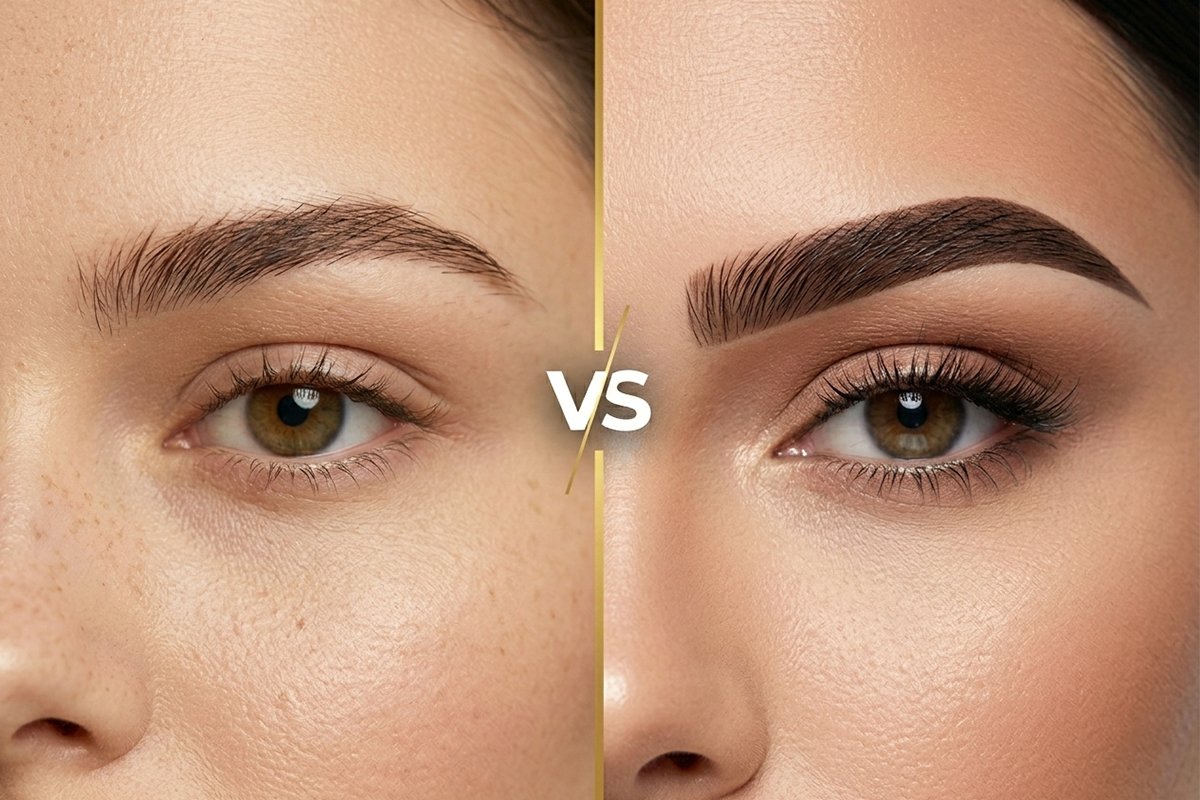
Hybrid Tint vs. Henna Brows—What Eyebrow Dye Manufacturers in the USA Want You to Know
Introduction
Choosing between hybrid tint and eyebrow henna is confusing. Many people in the USA pick one without knowing the real difference. Both color your brows. But they work very differently. If you care about ingredients, skin safety, or how long the color lasts, this guide is for you. Top eyebrow dye manufacturers know this choice matters. So let’s break it down clearly—no complicated terms, no fluff.
What Is Hybrid Tint? A Quick and Simple Breakdown
Hybrid tint is a mix of two things—regular eyebrow dye and oxidative color. It’s a semi-permanent product. It colors the brow hairs very well. But it doesn’t do much for the skin underneath.
Here’s what hybrid tint typically does:
- Colors brow hairs deeply and evenly
- Uses a developer (like hydrogen peroxide) to activate color
- Lasts around 4–6 weeks on hair
- Fades quickly on the skin—usually within 2–5 days
Hybrid tint is popular in salons across the USA. It gives sharp, defined results fast. Many professional eyebrow manufacturers make hybrid tints for salon use. However, it still contains some synthetic chemicals. So people with sensitive skin should patch-test first.
What Is Eyebrow Henna? The Natural Alternative
Eyebrow henna comes from the
known scientifically as Lawsonia inermis. It’s been used for thousands of years. Today, it’s become a top choice for people who want a cleaner eyebrow color option.
Unlike hybrid tint, henna stains both hair AND skin. That’s a big deal. It creates a fuller, more natural shadow effect under the brows. This makes brows look thicker and more defined—even without makeup.
Here’s what eyebrow henna typically does:
- Colors the skin beneath the brow (not just the hair)
- Uses plant-based ingredients—no peroxide needed
- Lasts 2–4 weeks on skin and 6–8 weeks on hair
- Conditions and nourishes while it colors
Many people across the USA, especially those going chemical-free, are switching to henna. And that’s driving demand for reliable henna-based eyebrow color products from trusted manufacturers.
Hybrid Tint vs. Henna Brows—Side-by-Side Comparison
Let’s make this easy to understand. Here’s a quick comparison:
| Feature | Hybrid Tint | Henna Brows |
| Main ingredient | Synthetic and oxidative dye | Plant-based henna |
| Colors skin? | Slightly fades fast. | Yes, lasts 2–4 weeks |
| Colors hair? | Yes, lasts 4–6 weeks | Yes, lasts 6–8 weeks |
| Contains peroxide? | Yes | No |
| Good for sensitive skin? | Patch test needed | Generally gentler |
| Processing time | 10–15 minutes | 15–20 minutes |
| Results | Crisp and sharp | Natural and full |
Both options have their place. The right pick depends on your lifestyle and skin type.
Which One Lasts Longer? The Honest Answer
It depends on what you’re measuring. If you want color on your brow hairs to last, henna wins. It can stay on the hair for up to 8 weeks.
But if you want skin stain—again, henna wins. It leaves a pigment shadow that mimics the look of filled-in brows. —again,
Hybrid tint is faster to apply and gives precise results quickly. But it fades from the skin in just a few days.
For USA clients who don’t want to fill in their brows daily, henna brows are the smarter long-term pick.
Who Should Choose Henna Brows? Practical Tips for USA Clients
Here are some clear situations where henna is the better choice:
- You have sparse brows—Henna’s skin stain fills gaps naturally.
- You prefer natural or organic products—henna is plant-based.
- You have oily skin—use a primer before application. Oily skin fades henna faster.
- You’re pregnant or nursing—always consult your doctor, but many prefer henna because it avoids peroxide.
- You want longer-lasting results—henna outlasts hybrid tint on both hair and skin.
Tip for USA clients: Look for henna products that are certified ISO, GMP, or HALAL. These certifications mean the product meets quality and safety standards.
Who Should Choose Hybrid Tint? When Synthetic Works Better
Hybrid tint has real advantages, too. Here’s when it makes sense:
- You want sharp, defined brows fast—hybrid tint delivers crisp results in 10–15 minutes.
- You already have thick brows—you don’t need skin staining. Just hair color works.
- You get brow tinting regularly at a salon—many US salons use hybrid tint as standard.
- You want a very dark or cool-toned color—a hybrid tint gives more shade variety.
The Role of Eyebrow Dye Manufacturers: Sourcing Matters
Not all eyebrow dye is made the same way. The quality of your brow color comes down to who makes it.
Trusted brow henna manufacturers focus on things like
- Pure raw materials (no fillers or adulterants)
- Consistent pigment strength in every batch
- Safe formulations that pass international safety checks
- Export-ready packaging for global markets
One example from the industry is Kirpal Export Overseas (KEO). Founded around 2000 by Mr. Sunil Walia, KEO has built over 25 years of experience in herbal hair and brow color manufacturing. They work out of India and export to global markets, including the USA.
Case Study—How Kirpal Export Overseas (KEO) Meets USA Demand
As more Americans shift to chemical-free beauty, brands need reliable eyebrow manufacturers they can trust. KEO responded to this by:
- Sourcing directly from henna farms—they show farm photos, and buyers visit galleries to prove ingredient traceability.
- Building a diversified product line—from pure henna powder to ready-to-use eyebrow henna color kits.
- Getting certified—ISO, GMP, and HALAL certifications give US buyers confidence.
- Offering OEM and private-label services, US brands can launch their own labeled henna brow products using KEO’s manufacturing.
For beauty brands in the USA looking to enter the natural brow market, working with certified eyebrow dye manufacturers like KEO removes the guesswork. You get consistent product quality, proper documentation for import, and packaging ready for retail shelves.
This model—where verified manufacturers supply clean formulations to private-label brands—is exactly how the natural brow trend is growing in the USA. You can explore more about such products and sourcing options through this Google resource on henna brow trends.
Ingredients to Watch For—Red Flags in Brow Color Products
Whether you choose hybrid tint or eyebrow henna, always check the label. Here are ingredients that should raise a concern:
- PPD (p-Phenylenediamine)—Found in some “black henna” products. It can cause severe allergic reactions. Avoid it.
- Resorcinol—A common synthetic dye chemical. Can irritate the skin with repeated use.
- Ammonia—Used in some oxidative dyes. Harsh on delicate brow skin.
- Metallic salts—sometimes added to herbal dyes. Can react badly with other chemicals.
Always do a patch test 24 hours before full application—especially in the USA, where brow services are regulated by state cosmetology boards.
Frequently Asked Questions (FAQs)
Q1: Is the extra time needed for natural hair color worth it?
Yes, definitely. Herbal eyebrow color takes a bit longer to develop than chemical dye. But it conditions and nourishes the brow hair at the same time. You’re not just coloring—you’re also improving brow health. That makes the extra 5–10 minutes very much worth it.
Q2: How often should herbal hair color be applied?
Depending on the person, the application time depends on your hair growth and your hair regimen, generally. As for initial uses, the color is suggested for reuse after 7 days if the true depth of the color is needed, or repeat after 15-20 days when there is new hair growth from the scalp. As we do with chemical colors, a root touch-up is sufficient.
Q3: Can herbal hair color give the same results as chemical dyes?
Since plant-based colors are non-bleach colors, they cannot provide as much hair transformation as chemical colors. The lighter hair can be dyed with natural hair color for a full transformation. But for Asian dark hair, covering or blending the greys is the only option with some tint in light.
Final Thoughts: Is It Right for You?
Both hybrid tint and eyebrow henna are solid choices. But they serve different needs.
If you want fast, salon-sharp results, go hybrid tint. If you want longer-lasting, skin-staining, plant-based color, henna brows are your best bet.
And whichever you choose, always buy from trusted eyebrow dye manufacturers. Quality ingredients mean better results and safer skin.
The US beauty market is moving toward cleaner, more natural products. Henna brows are part of that shift. And with certified manufacturers stepping up supply, it’s easier than ever to get great eyebrow color without compromising on safety.
No responses yet